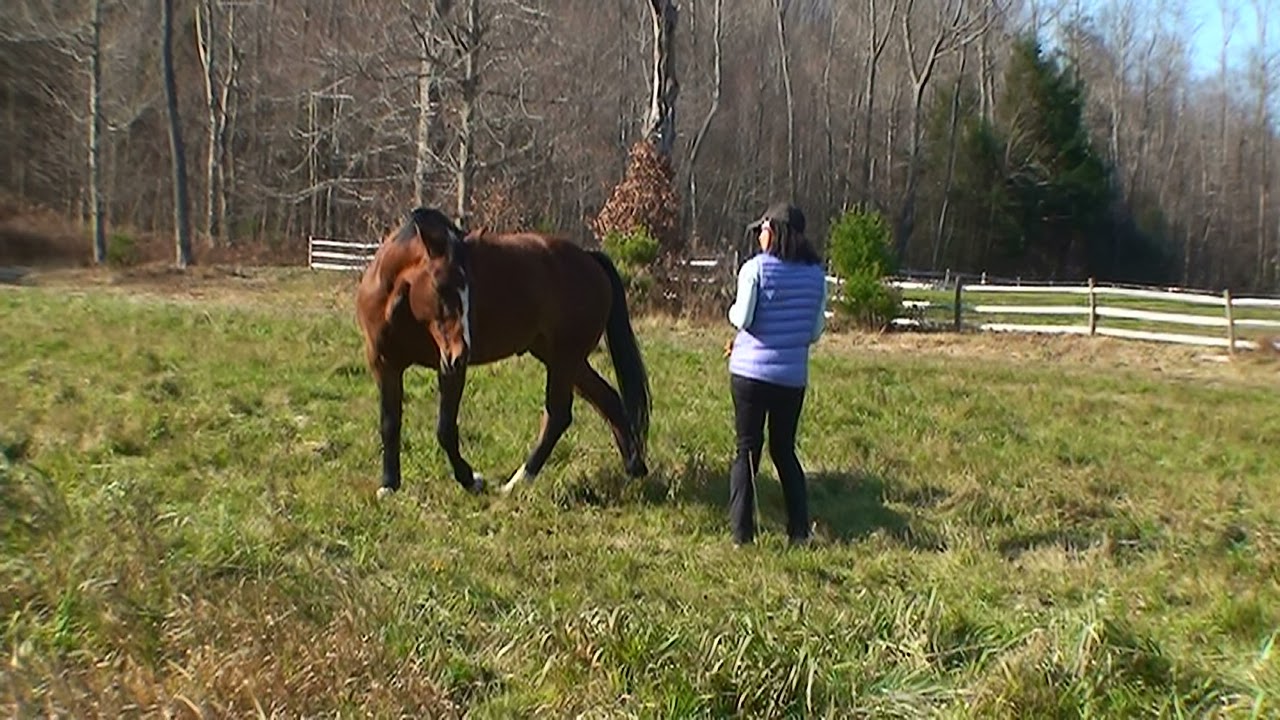
The exercise is about how we interpret things differently as individuals. An interpretation of the horses in the photo would be for example, a statement like "these horses are sad" or "These horses are happy" we really have no way of knowing if they are either of those things.
Here's how it will work. If as a group of readers, each of us says a observation about the horses in the picture we can all agree on as a group, write it in the comments area. And anyone can say they agree or disagree with that statement. The goal is that we can all agree as a group with the statement. It is a herd harmony exercise.
I'll start by making an observation about the horses that I think is true. I see a chestnut horse with a white marking on his face. Do you agree or disagree? Get the exercise. Don't be shy give it a try!
I wanted to let you all know that the new blog is at this link http://fdhorsemanship.com/ and you can subscribe to it on the side bar in this blog on the upper right form to get the NEW blog posts emailed to you. You may also subscribe to it at the link. I look forward to your observations!
Some of you may know that I work with dog training as well as horses and in fact started with dog training before doing horses as a child. For me dog and horse training are very close though some may say they are different because of being prey and predator. To me they are both social animals and therefore have a social culture. I have found that the techniques I used with horses and dogs quite easily reciprocated. I even work with dogs and horses simultaneously to help myself and my clients multi-species families achieve harmony and balance.
Many people don't think of it this way, but our dogs are at "Liberty" with us more than in "Tack" I use a Liberty to Leash principle that closely resembles my Liberty to Line (Leave out the Mounted for dogs!) progression for Horses.
We spend so much time with our dogs just enjoying each other's company that we build those un-shakeable bonds with them. When we bring that to our horses, we create the same thing. Oh it would be so easy if our horses could just be in the house with us! I know some of you would if you could. Some of you may have! With our horses, we have to go into their house (pasture/paddock) to build the same Connection.
When I work with dogs, I use the same free form, organic, in context style I use with the horses. Training is done in the moment and is flexible and fun. It is adapted to each dogs personality and nature even beyond their breed. Though I do take breed traits into account, I find many dogs and horses that defy their breed characteristics.
You may not have known also that I do Self Selection (Zoopharmacognosy) with my dogs as well. It is equally fascinating to see what they choose in the herbs and essential oils. Since I have several animals, It makes me feel good to be able to offer them what they individually seek. My French Bulldog takes a wide variety of things that my Boston doesn't take. if I were to treat them the same, My Boston would get many things he didn't want or need.
Recently, Buddha, my Boston had some digestion and bowel issues and my vet recommended I give him Pumpkin, Sweet potato, or Yam. I tried Sweet potato and he wouldn't eat it at all. I then tried Pumpkin and he ate a small bit and then wouldn't eat anymore. I offered him Yam and he gobbled it up! He picked which one was the right one for him and I had no trouble getting him to eat it by itself. I felt good because I knew he was getting enough and it was what he needed. I offered each thing on it's own not mixed in food so I could see what he really wanted. This was especially important because he is a very finicky eater.
During Fiona Habershon's (http://fionahabershon.com/) sessions, if she sees and animal wants a certain herb in small amounts she will often offer several similar herbs side by side to make sure she gets the exact right herb. Sometimes an animal will take something that is close to what they need in a small amount but it's not quite right. If you put some other similar herbs side by side, then the animal sorts through and goes "Yes! that's the one I wanted" And gobbles it up.
With that, I wanted to announce that Fiona is coming back to the US this spring and we are planning details as we speak. I will keep you all posted as we firm up dates but it looks like the end of May. We will be doing some workshops together for Spring Tune ups. As usual, It will be Unique, educational and fun experience. If you have any stories to share about Self selection or any other comments, please share!
*Try Self Selection at your risk http://www.fdhorsemanship.com/
Upcoming Events: http://www.fdhorsemanship.com/#!calendar
Feb 9th: 1 day FDH workshop at Silver Moon Farm, Greenville, NY
March 21-22 FDH Privates and Lessons over 2 days. Charlottesville, VA
May 4th: FDH Confidence for trail riders workshop. Windhorse International Bethlehem, CT
June 20-24: FDH UK Clinic at The New Horse, Motcombe, UK
Riding this way is an exhilarating and free feeling!
I have been in the horse industry long enough to know that a lot of horse people love to use gadgets. I have seen people and horseman use side reins, draw reins, Chambons/Degogues, Pessoa rigs, Martingales and special Cavessons (some even with studs!). Phew! did I leave anything out? The bit manufacturers would have you believe that there is a Magic bit that would make your horse softer, rounder, more engaged, happier in his mouth and perfectly on the bit.
I stare incredulously at walls of what I call "bondage" and medieval looking bits at tack shops and competition wondering why? These pieces of equipment not only don't "fix" anything but they often cause more problems and muscular discomfort. They can even stop a horse from being able to do all the things we are asking him to do! The horse can not go forward, go round or even breath properly in some cases. And tension? Yes this would cause tension if at the very least, from the horse trying to fight against these bits and devices to do what you were asking.
I was exposed to all these things early on but knew that this was not how I wanted to train. My path has taken me away from the band-aid quick fix approaches. I have found that there is no more humane training method then, thoughtful, patient, correct fundamentals. I combine that with my Liberty and Ground exercises and find that there is no need for gadgets ever.
I have found that most people do not intentionally use these things. They just want help with training problems and often don't have access to good quality instruction. Some people are genuinely afraid of their horse and are just trying to stay safe. Unfortunately, I have found that horses that don't want to participate willingly, don't seem to care what gadgets you have on them. They will rear, buck, bolt, and spin to communicate their offense or pain. I have for sure seen dressage horses flip out despite having two bits on!
My point is, we kid ourselves into thinking these things control our horses. They don't. The horse is still allowing us to ride and handle him until he isn't. I frequently say "A horse is only as trained as he's willing to be" Horses are very willing creatures most of the time. To their own detriment unfortunately at times. They put up with a lot from us two leggeds and they show up day after day and try harder for us even when their saddles are wrong, their feet hurt, their bit is uncomfortable, and they have pains and stress. They often do what I call "politely" complain for awhile about something that goes ignored until someone gets bucked/reared/bolted off with. That's about the time a horse is yelling "I need help! why aren't you listening?" And then someone says "ooh you naughty horse!" time for gadgets.
My journey has taken me many cool places with my horsemanship but no cooler place is to ride with little or no equipment. It takes utter and complete trust in each other and absolute communication that is completely agreed upon. It forces us to be absolutely real with each other. Gadgets and bits are no substitute for a strong Connection and good Fundamental training. Oats for thought...
*Bridless riding should be done at your own risk. FDH does not recommend or condone anyone trying or riding bridless with their horses. http://www.fdhorsemanship.com/
Upcoming Events: http://www.fdhorsemanship.com/#!calendar
Feb 9th: 1 day FDH workshop at Silver Moon Farm, Greenville, NY
March 21-22 FDH Privates and Lessons over 2 days. Charlottesville, VA
May 4th: FDH Confidence for trail riders workshop. Windhorse International Bethlehem, CT
June 20-24: FDH UK Clinic at The New Horse, Motcombe, UK
Some of you who know me well know that I come from a family of artists. Art has always been a part of my life but my inner artist sometimes wished I could combine my horses with my art. Many people have combined their passion for horses with their art in their own way but I had yet to find a way that spoke to me and my artistic voice.
I made genuine sterling silver and gemstone Wow!bands(http://www.fdhorsemanship.com/#!shop) for bridles and that was cool but I needed more. I designed my own websites, business cards, and logos but still wanted another outlet.
For those of you who don't know, my father, Jack DeJohnette (https://www.facebook.com/jackdejohnette) is a well know Jazz musician and master of Improvisation. Growing up, music was all around me but little did I know that this Improvisational style would come to permeate me to the very core in my career as a horseman.
As many children are, I was influenced by my parents but sometimes we don't realize how much. As I began my path into the art world, The horses called to me at a young age as well. I was completely obsessed and by the time I was 8 I poured over books about these magical animals, By the age of 16 after many riding lessons and working at the local stables, I declared I wanted to be a professional horseman. I had no real idea what this entailed but I knew the horses were calling to me in a very visceral way.
I followed a fairly traditional route with horses...Until I didn't. Like many people, I was taught all the basic ways of being with horses which really didn't allow us to "be" with horses. It took me many years to find my "outside the box" mentors that set me free from that box. I openly confessed that when I was set free as I call it, An awesome, experimental, happy monster was created. I stepped enthusiastically into a world where I could do anything with my horse I wanted as long as we understood each others vulnerabilities. Anything was and is possible if you are willing to try and figure out how to do it. From an amazing, wonderful deep connection with an animal, amazing things happened and continue to happen.
I got the idea to collaborate with my father when I started to see that this Liberty training that I was playing with closely resembled how musicians improvised together. It was a free expression between two or more beings with music. I felt like when my horses and I were at liberty together, It was like a musical improv. Especially since we are often listening to music. In Dressage we use the terms Tempo and rhythm all the time. These are music terms. Horses are music to me. Dancing with them is joy.
I like the idea that when the horse is at liberty, he is like another musician and can play his own instrument. When he is in tack, or under saddle it is not the same though I enjoy riding very much, It is a different type of collaboration. More like a guided dance.
My dad was gracious enough to agree to come to the farm and help me see my artistic vision start to come to life. I brought him to the herd and explained how he should see the horses as fellow musicians and "listen" to their music. That way he could get in the right frame of mind when I brought Mercury in to the arena to join our Music and Dance Trio.
In my vision I wanted to put a shaker on Mercury's leg so he could have his own instrument. I had to get him used to the sound and lots of carrots seemed to convince him this might be a good idea! He was a bit nervous about it and all the film people around. "Oh and who is this person sitting in the middle of our arena with instruments all around him making all these strange sounds!" He seemed to say. Were it not for our deep connection I would not have been able to settle him as quickly as I did.
My dad started to listen to Mercury's movement with the shaker and as Mercury started to move with me and dance, my dad expertly added his music spontaneously to what was happening. It was pure magic and joy! I felt that all at once, all my worlds came together in a way they never had before. I had made a living breathing, work of art! Live Music, Dance, Horses! I must say I am quite spoiled now and want live accompaniment all the time! We filmed the whole experience and will be filming more. I'll keep you posted in the mean time, enjoy another exclusive trailer. http://youtu.be/AVMnJqF1-LM http://www.fdhorsemanship.com/
I went to a really interesting and powerful workshop last weekend based on EAL/EAP (Equine assisted Learning and Psychotherapy) work and Linda Kohanov's book The Power of the Herd (http://www.poweroftheherd.com/) teachings. It was geared toward Personal development and Leadership training skill building.
I wanted to share some of the brilliant exercises that brought into sharp focus how our thinking and being can be shaped in so many ways by old patterns and our brain's Interpretation of things can be skewed greatly by that.
We did several exercises that involved just Observing your surroundings and your own feelings about them. We did boundary sensing exercises on each other and with the herd of horses provided. We did an Observation exercise which was fascinating and telling. And we did a final group exercises that really showed how when you want to work with many different people with different ideas and personalities how wrong and then right it can go once you come together. This particular exercise was a very clear example of why people have trouble working together in businesses, relationships and life in general. But when given the tools and skills needed, we were able to get 9 people and 6 horses at Liberty on the same page and the result was a harmonious, joyful experience! It wasn't easy but we did get there all together as a unit. It was abundantly clear to me why businesses fail, Politics often don't resolve anything and personal relationships struggle between friends and family. The Horses as usual were fantastic guides.
There were several terms and ideas that really resonated with me and I could relate to. One term that was used was Vilifying. Vilifying (Judging negatively) is what we do when someone does something we don't like or a even a school of thought we don't like and we decide that they are inherently bad by association. Basically writing someone off because of their beliefs, ideas etc. Or even attacking them personally. I think the world is full of this type of behavior and in fact wars are started because of this. I feel the horse world is fraught with this as well unfortunately. Another term used a lot was Predatory behavior. Other related terms would be Dominant, Intimidators, and Bullies. Of course we have all seen this behavior in the horse world as well.
My favorite exercise was the Observation/Interpretation Exercise. It involved all the participants standing with the horses and observing something about them that we ALL had to agree on what we saw. This exercise challenged us to see what is really in front of us and not "project" our interpretation of any emotions or ideas we thought we saw. The result was a very neutral non-judgemental environment between us and the horses. So for example, one person would say what they observed. They might say "that horse is happy" but that is an interpretation that not everyone might agree with. Remember, we ALL have to agree on what we see to be able to work as a team. Get it? Another person might look at that same horse and say "That horse is sad" because that is their Interpretation. To make it neutral and easy for us to agree on what we observed, we had to stick to statements like "that horse is a bay" and of course, we could all agree with that! Or "That horse is eating hay" Yes we can ALL agree that we Observed that. The agreement in what we ALL observed, unified and neutralized our connections with each other. When someone would say something they "Interpreted" it split us as group because inevitably, we would not all agree on that Interpretation.
Another example of this was with my Mother who participated as well. She was standing with a group of horses around her and then we had to share what we observed. One person said my mom looked scared. My mom then relayed that she was in a state of complete joy at that moment. So the other person's Interpretation was coming from their own experience and they projected it on to my mom. How often do we do that to our horses? I know I see it all the time.
Try this Interpretation exercise and let me know what you find out about yourself and others. I often tell my students to ask themselves "What is the horse really doing right now? Not what you think he's doing, but what is he really doing? It can greatly improve your experience with your horse. Especially the fearful people. I find fear can make us spend a lot of time Interpreting everything around us in an effort to stay safe. It can quickly become a cycle of projections from brain and not what's actually happening.
In the company of horses (http://www.inthecompanyofhorses.com/index.html) is in New Jersey and it is well worth it if you can participate in a workshop on every level. Non horse and horse people alike. I met many like minded awesome people too! I look forward to doing another workshop and implementing these powerful techniques in all areas of life. http://www.fdhorsemanship.com/
Happy New Year! Each year I personally go through my previous year's accomplisments and then I look forward to the upcoming year and set goals for the next year. These goals can be personal, professional or equine related. Whatever you want.
2013 was full of great clinics and moving ever forward in my own journey with my horses and my clients and their horses. I have continually watched with amazement how you all are making steady progress with your own journeys. Some of you have really made huge leaps whether it was with yourselves or really challenging horses.
Your exercise as always, is to write down what has improved with you, your horse or horses over the last year. Where you were a year ago and where you are now. This can be anything at all from what you personally have improved, what you and your horse have improved together, to what has improved with your horses character, condition or training.
Once you have done that, I want you to write where you would like to be next January. The key to goal setting is having a clear picture in your mind or a very clear idea of how you would feel when you have achieved this goal. It doesn't matter if it's improved connection, a technical training skill, more confidence etc.) Try to see what that would look or feel like if you had already achieved it. Then, start making choices that bring you toward that goal without any attachment to how you will get there, how much time it will take or what steps you will do. Just a firm belief that you can and will get there. Then, sit back and notice each and every little step of that journey for the next year. Try to really stay present and aware of these moments as you go along even if it seems like nothing is happening. One of my favorite ideas from Deepak Chopra is about uncertainty. We experience uncertainty frequently with our horses and our lives. When you are uncertain, try to ground in the uncertainty. Try to let go of control and just be in it. It's when the universe is doing it's sorting for you. I'd love to hear some of your thoughts on this. Below is just a sample of some of moments of my year. I shared those moments with a lot of you and look forward to sharing more in 2014 Happy New Year! http://www.fdhorsemanship.com/ http://fdhorsemanship.com/virtualclinic/
What is the difference between Trained Liberty and Liberty Training? With the increasing interest in Liberty and Liberty play, I have noticed that there is a distinct difference between what I call Liberty Training or Tricks and Trained Liberty.
Liberty has been around for some time in many ways shapes or forms. It is used in circuses, entertainment, and even movies and TV. This Liberty constitutes mostly what I call Trained Liberty and tricks at Liberty. It is distinctly different than Liberty training or play. Horses trained in Liberty are taught a lot of their cues in tack and under restraint of some kind as opposed to being at Liberty and free to come and go in the conversation as well as change the agenda if they want to. Liberty taught in round pens or small areas also constitutes the possibility of the horse not having the ability to leave the conversation, change the subject and be free to communicate in a two way conversation.
What Liberty Training looks like to me is a free flowing organic conversation that changes moment by moment. I have no feeling of what my horse "Should" be doing. Only a feeling of enjoying the conversation, and the companionship intertwined with whatever we may be playing with. Take the pressure off. There is a really nice space to train in when we do that. It opens door ways to more interesting, fun training for both horse and person. This does not mean you are not communicating or even communicating quite strongly at times, It just means there is no pressure to achieve a particular outcome or result. Just you saying something, and the horse is allowed to say something. And then you listen to what the horse says. Then you say something back that seems appropriate in that moment.
I have hula hoops in my ring that are on the ground for figure guides and Mercury keeps showing me that he would like to work with the hula hoops when he is at Liberty. He clearly goes over to them and puts his front feet in the hoop. There are 4 and he will proceed to the next one and do the same. I have never taught him this and he offers it as his own idea. I am interested in this game he is showing me that he made up. Stand in the hoops with your front feet. I might then elaborate on this game by adding another piece to it. This to me, is the spirit of the Liberty play. It is free, organic and two way. Even when I am practicing more and more advanced Liberty play, I am always looking for my horses ideas, suggestions and input. I am always pleasantly surprised by what I get. I have a photo series of what to me shows the interaction I desire with my horse at Liberty. It is all spontaneous, co-creative, in the moment and a lot of fun! Happy New Year! http://www.fdhorsemanship.com/


.jpg)
.jpg)